
CEO@SEA – Blog 5 - When the Rhythm Breaks
CEO@SEA – Blog 5 - When the Rhythm Breaks
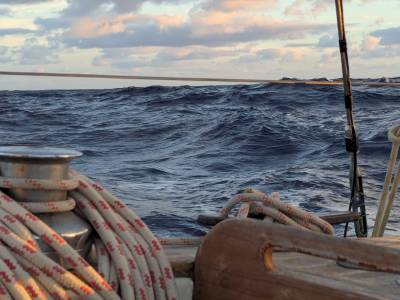
People tend to imagine ocean sailing as a string of dramatic moments. In reality, it is the small disruptions that test you. We are now more than 2,100 miles in, with roughly 600 miles still to run. That is about three weeks at sea for a small, old ketch like Supertaff. So this is not a short experiment. It is long enough for patterns to form, fail, re-form, and expose the weak points that never show up on shore.
A mild flu has worked through the boat over the past few days. One of us took the brunt of it, the rest drifting through their own lighter versions. Nothing dramatic, but on a three-person, three-hour watch cycle, even a small dip in energy bends the whole system. Supertaff normally runs with a clean rhythm. Three on, six off. Predictable, efficient, almost mechanical. But once one person falters, the others start compensating. Add more wind, more motion, and sleep that arrives in small, unconvincing doses and the whole thing starts to wobble. Not dangerously. Just enough that you feel every extra task in your bones.
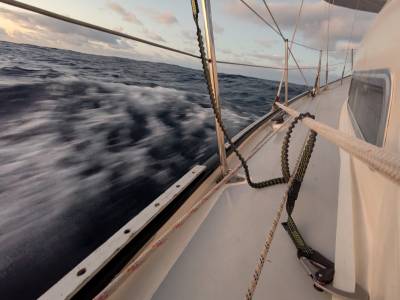
We have had our highs on this trip. Schools of dolphins at dusk. Long runs under sail with the boat settled and moving well. A homemade weather tool that has now spread quietly through parts of the fleet. And the steady comfort you get from an older boat that feels honest even when she rolls 30 degrees side to side. There have been lows too. Light airs that turned hours into days. Squalls that arrived at inconvenient times. Cooking at angles. Fish lost to broken gear and a ripped mainsail. The sort of small frustrations that accumulate and go unnoticed until one of you mentions it out loud.
This mix of highs and lows is what makes the business insight clear. Teams don’t usually fall apart because of a single big hit. They fray at the edges when people are tired, unwell, distracted, or operating at half capacity. You don’t always notice it on land because there is enough noise to mask it. Offshore, in a boat the size of a large bathroom, you feel the shift instantly.
One useful observation from this week has been how stabilising it is to have tools that quietly fill the gaps. AI has supported us when our energy dipped, helping keep messaging clear and considerate when none of us were at our best. For a small team or small business, this is a spare crew member who never gets tired. It doesn’t solve everything, but it smooths the edges and keeps momentum alive.
Running Boatshed from sea is entirely possible. The systems work. The team on land carries the weight when needed. But this week has reinforced something easy to overlook: it doesn’t take much to upset the rhythm. A touch of flu. A rough night. A shift in conditions. Suddenly the whole operation relies on others holding the shape while you recover.
If CEO@SEA is an experiment, the early conclusion is simple. You cannot centralise resilience in one person, even if that person is the founder. The business needs distributed responses and a real fallback. Plan B and Plan C that activate automatically when the CEO is offshore, tired, or stretched thin. It is not a complicated idea. It is exactly how you cross an ocean. Set the course, trust the crew, and make sure the system is built to survive the human wobbles along the way.
Cheers Neil :)
Image Gallery
Comments 1
Please note this comments section is public. Please do not post your personal details here. Please read our commenting guidelines before posting.
Login or register for free

Hang in there Supertaff Captain/ CEO & Crew, You got the wind & Rhythm at your back, What a memorable & eventful Passage Indeed !